
Wynn Hotel Case Study -
Product Design & UI/UX
Reimagining a luxury hotel’s digital experience for guests and staff
Project Overview
The Wynn Hotel project focused on modernizing and enhancing the digital experience for one of the world’s most iconic luxury hotel brands. The goal was to design a digital product — whether a mobile app, guest dashboard, kiosk experience, or internal tool (depending on the specific deliverable you want to emphasize) — that aligns with the Wynn brand’s premium positioning while improving usability, personalization, and operational efficiency.
My role: UX research, interaction design, UI design, prototype development, and collaboration with stakeholders to align the digital experience with business goals and user needs.
The Challenge
Wynn Hotels are known for exceptional service, luxury amenities, and personalized guest experiences. However, many of the digital touchpoints used by guests and staff were fragmented or inconsistent with the premium brand experience expected by users. Key challenges included:
Siloed digital experiences: Hotel services were available across multiple systems (in-room tablets, reservation portals, concierge tools) that lacked a unified UX.
Mobile experience gap: Guests increasingly expect mobile-first interactions — from check-in to service requests, payments, and local recommendations.
Operational friction: Staff used multiple systems to manage guest requests, room status, housekeeping, and guest profiles.
Brand consistency: Digital interfaces needed to align with Wynn’s high-end aesthetic and service values.
Objective: Redesign the digital experience to be seamless, luxurious, and intuitive for both guests and staff while reinforcing the Wynn brand identity.
UX Strategy
User Personas
The Luxury Traveler
Seeks convenience, personalized recommendations, fast service, and digital tools that feel premium.
The Frequent Business Guest
Values efficiency, seamless mobile check-in/out, quick access to itinerary and amenities.The Concierge Staff
Needs fast access to guest preferences, real-time service requests, room status, and local recommendations.Housekeeping & Operations Staff
Requires clear task management, room status updates, and streamlined communications.
Design Principles
Luxurious simplicity: Elegant UI that feels premium without unnecessary complexity
Clear navigation hierarchy: Minimal clicks to complete key tasks
Contextual personalization: Offer relevant suggestions (dining, spa, reservations) based on guest profile
Performance & responsiveness: Smooth interactions with fast feedback loops
Consistency across interfaces: Harmonize guest app, kiosk design, and staff tools
Key Features & Flows
Guest Experience
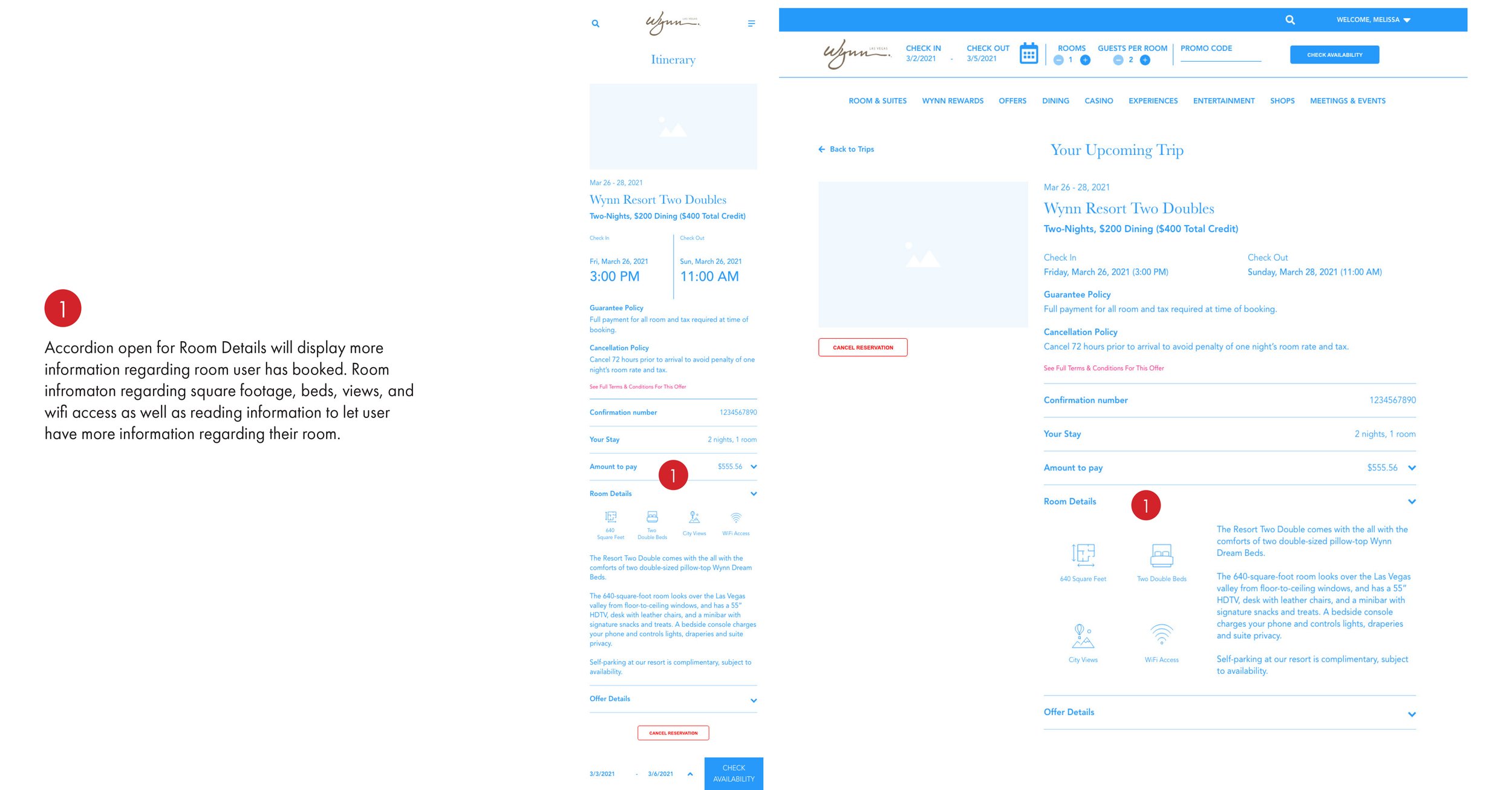
1. Mobile Check-In/Check-Out
Digital check-in with document upload
Room assignment preferences
Mobile key generation and access
2. In-Stay Controls
Room environment controls (temperature, lighting, curtains)
Service requests (housekeeping, food & beverage)
Spa & amenity bookings
3. Personal Concierge & Recommendations
Suggest curated experiences, local events, dining reservations
Personalized notifications and reminders
4. Billing & Wallet
View charges, invoice details, pay from mobile



Summary
The Wynn Hotel Case Study showcases how thoughtful UX/UIdesign can transform the digital experience of a luxury hospitality brand. By focusing on simplifying core tasks, personalizing guest interactions, and unifying disparate systems, the solution elevates both guest satisfaction and operational effectiveness — all while maintaining the premium aesthetic and performance expectations associated with Wynn.