
iGaming Platform Design
Leading design across a $10B+ enterprise gaming platform - four products, one unified foundation.
Project Overview
In a regulated, high-stakes environment where every design decision touches real money, the hardest problem wasn't designing a product. It was designing the system behind all of them.
A $10B+ gaming enterprise was running multiple game initiatives — traditional table games and live game-show experiences — that had each evolved independently, with their own interface logic and visual language. As the product roadmap expanded, the fragmentation became a liability.
I was brought in as design lead to define the unified interface layer that could serve all current products and support game concepts that hadn't been defined yet.
Role: Senior Product Designer - Design Lead
Company: Global Gaming Enterprise
Industry: iGaming / Regulated Entertainment
Scope: Platform UX · Design System · Live Dealer Integration · Cross-functional Leadership Timeline: 16-Week Full Product Cycle
Outcome: Delivered a unified design foundation that reduced UI defects by 15% across all gaming surfaces, measured through QA defect tracking across the full 16-week product cycle.
The Leadership Challenge
What made this different from a typical design engagement
This wasn't a single-surface problem. It was a multi-stakeholder, multi-team, multi-platform challenge operating under live regulatory oversight.
Four functional groups had to move in alignment: Design, Art & Motion, Engineering (in-house and overseas), Broadcast (whose live video feeds had to coexist with every UI decision), and Compliance & QA.
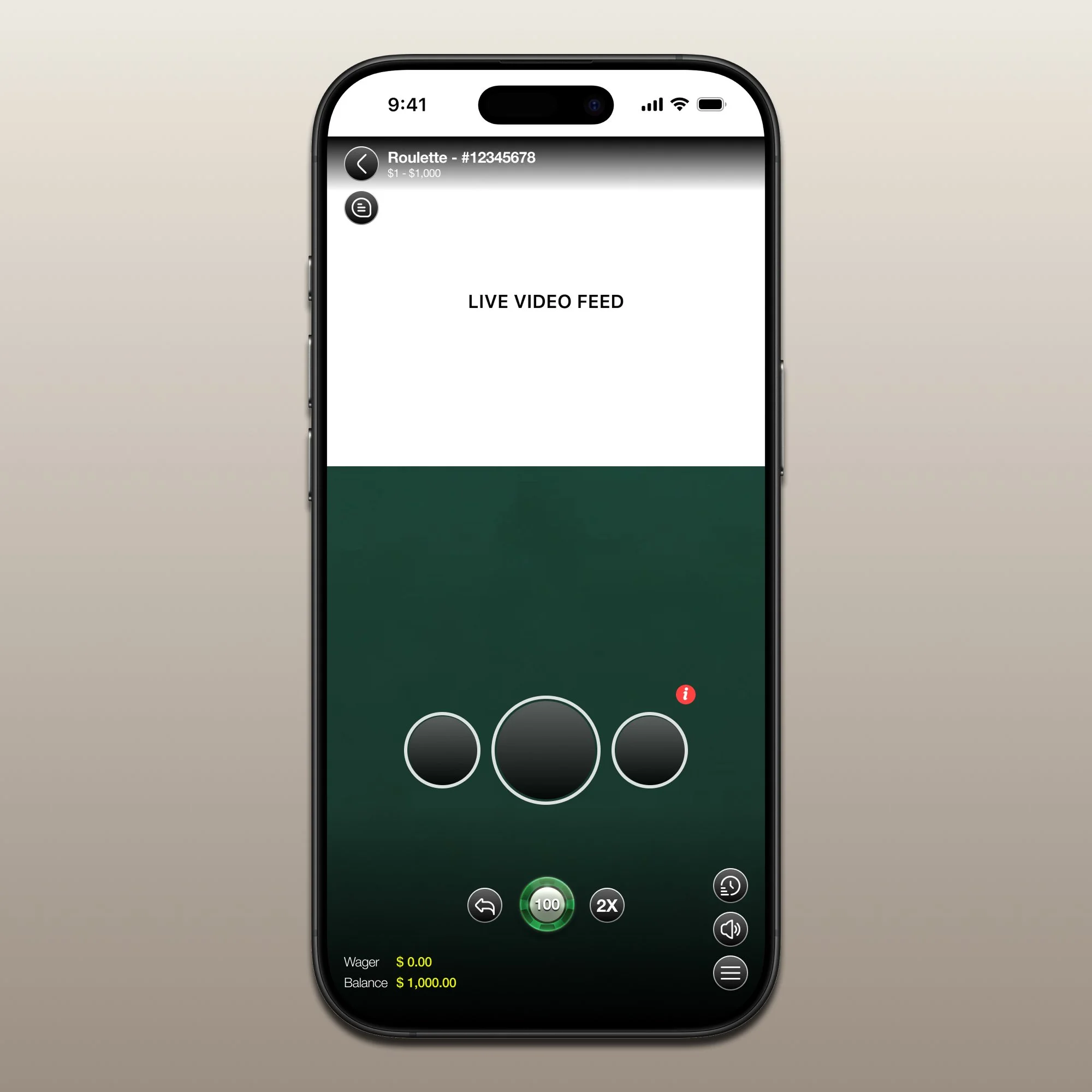
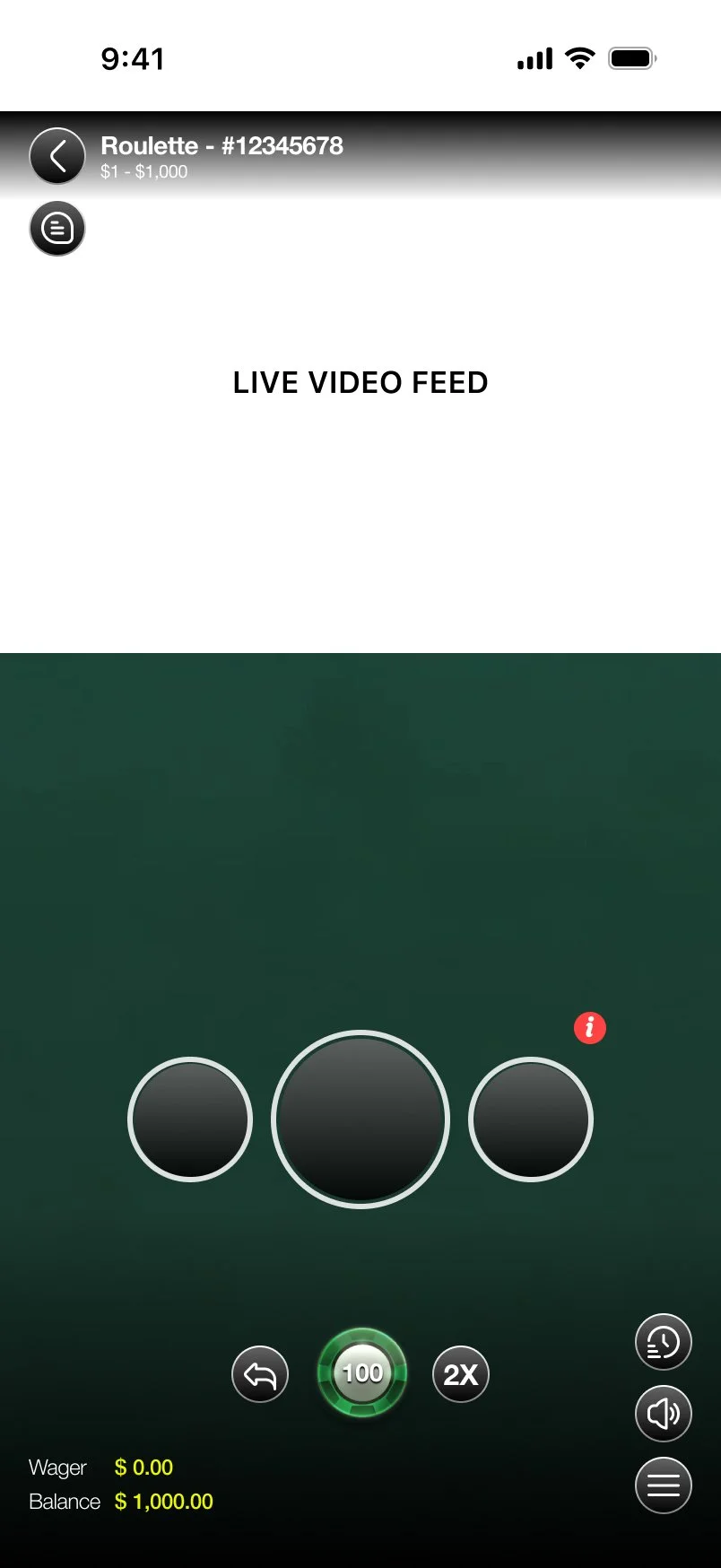
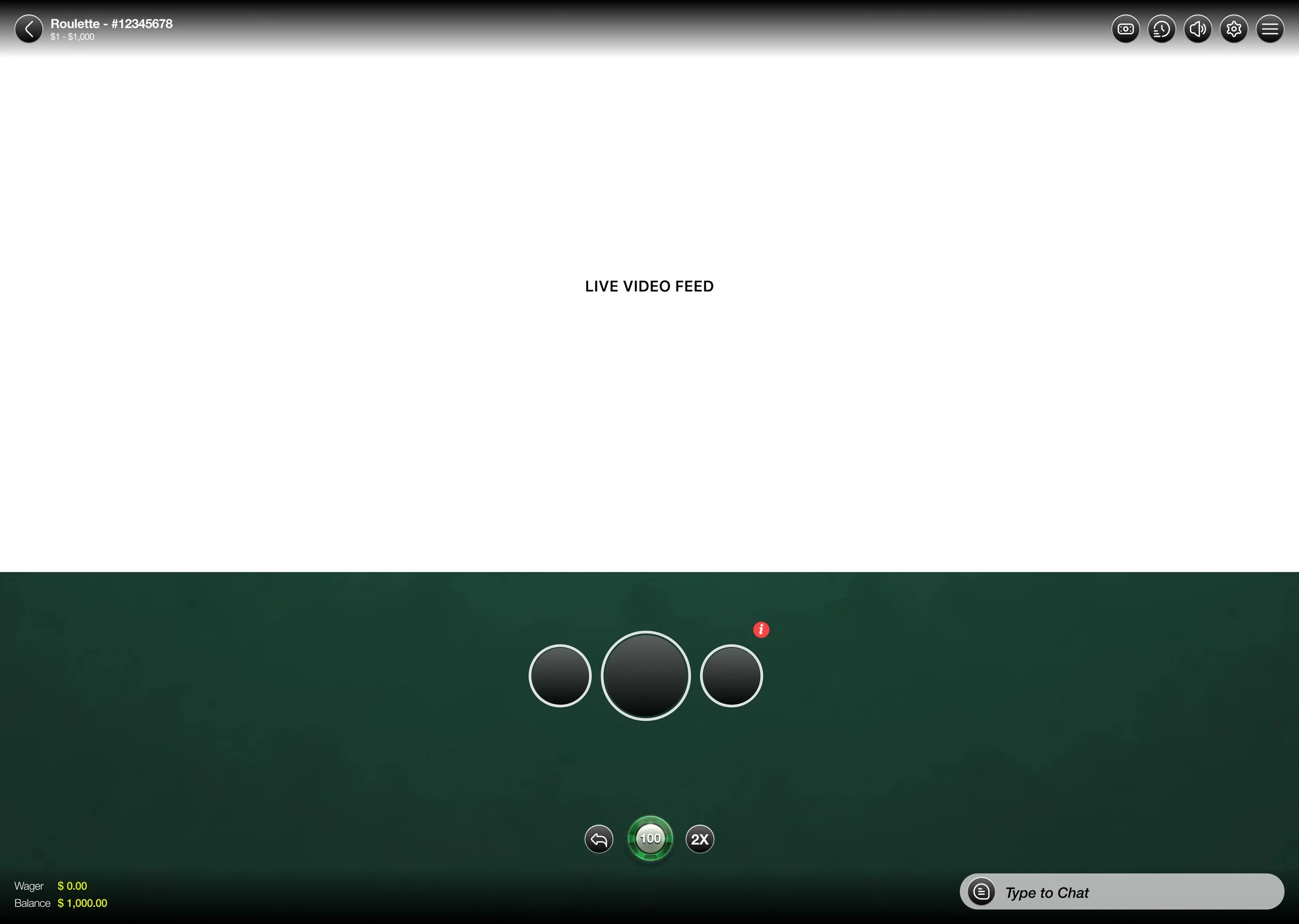
The broadcast team created the persistent point of friction — every UI decision had to be tested against live video feeds to ensure design never blocked wagering mechanics or interfered with the video display systems that regulatory compliance depended on.
As design lead, my job wasn't just to design. It was to make alignment possible across all of them.
Strategic Decisions
The calls only a design lead makes
Defining the foundation before the features. The instinct in a 16-week cycle is to move fast on visible work. The right move was establishing shared constraints first; information architecture, cross-platform parity matrices, and component definitions that all surfaces would build from. Decisions made in weeks 1–5 prevented cascading rework in weeks 11–16.
UI placement as a compliance decision. In a live dealer product, UI can never obscure the video feed or compete with wagering information. I defined core UI placement and integration patterns not just as design choices but as regulatory constraints validated with Compliance before a single high-fidelity screen was built. This prevented last-minute redesigns that would have missed the launch window.
Motion as a usability standard, not an aesthetic. In close partnership with the motion team, I established motion guidelines evaluated against one question: does this serve the user or distract them at a moment that matters? Every animation decision was a UX decision first.
Art direction as a system constraint. UI and art were designed as a cohesive system rather than parallel workstreams. Visual treatments had to enhance the experience without overpowering UI elements or competing with critical wagering information a constraint that required constant negotiation between craft and compliance.
The Process
How a 16-week regulated product cycle actually works
Discovery & Alignment
Timeline: Weeks 1–2
Auditing existing betting flows, competitor analysis, defining live betting UX patterns, and identifying platform constraints. Cross-team alignment locked in disclosure requirements before wireframes began.
UX Architecture
Timeline: Weeks 3-5
Information architecture, core component definition, and a cross-platform parity matrix. Mid-fidelity wireframes gave stakeholders something concrete to react to before visual investment began.
Visual Design
Timeline: Weeks 6-8
Visual language for live game states: typography, density, motion rules, accessibility. Execution across desktop, mobile, iOS and Android in parallel. A live betting component library with full spec documentation, validated by frontend leads and signed off by Compliance. AI-assisted workflows were used throughout ideation and component exploration, accelerating iteration cycles without compromising craft or compliance requirements.
Engineering, QA & Launch
Timeline: Weeks 11-16
Daily async design reviews, animation tuning, real-data testing across Web FE, Mobile, and backend odds feed integration. End-to-end compliance verification and final launch readiness sign-off.
The Outcome
Delivered a unified design foundation and component system that transformed a fragmented multi-product ecosystem into a platform teams could build from consistently reducing UI defects by 15% and enabling faster iteration across all gaming surfaces.
Three things this project confirmed:
01 - Time constraints are constant. Success in large-scale platform work depends on prioritization, not completeness. A 90% solution shipped on time beats a perfect solution that misses the window.
02 - Clarity enables progress. Establishing clear goals, milestones, and decision ownership early was critical across distributed teams in multiple time zones. Ambiguity at the start compounds into blockers at the end.
03 - Stakeholder alignment drives outcomes. Consistent alignment with Compliance and the Broadcast team — the two groups most likely to create late-stage blockers — ensured progress and preserved confidence in foundational decisions.